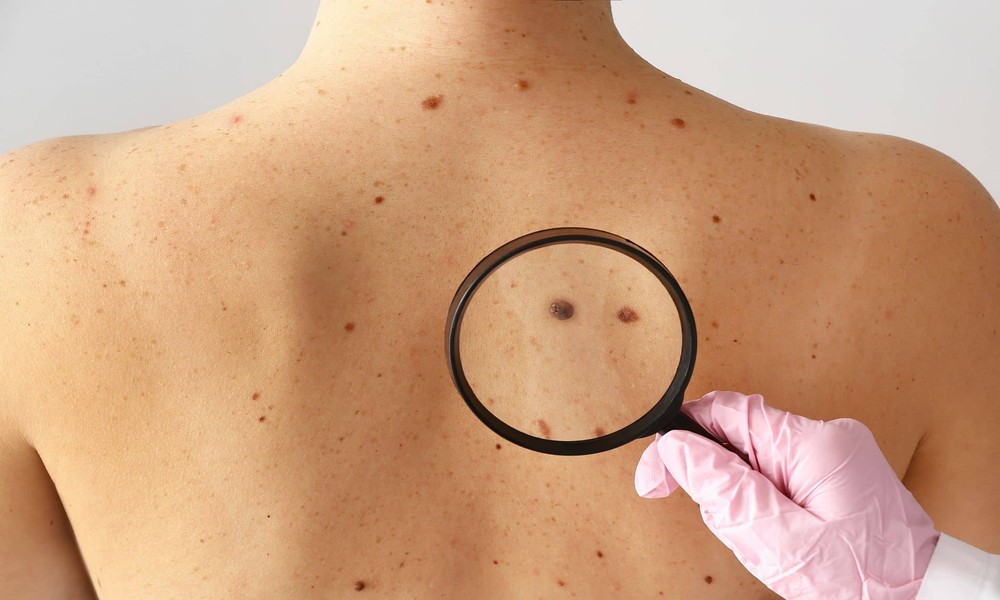
Monitoring your skin is a vital habit for your long-term health. Skin cancer can often appear as a simple dark spot or a changing mole. Early detection saves many lives every single year. You must look at your body with great care and focus. Knowing what to find helps you stay safe and healthy. This guide explains the famous system for checking your skin at home. It provides a clear path for your personal wellness journey.
Understanding Asymmetry in Skin Spots
The first letter of the rule stands for asymmetry in moles. A normal mole usually looks round and very even. You can imagine a line through the middle of the spot. Both sides should look like a perfect matching pair. But cancerous spots often have two very different halves. One side might look much larger or thicker than the other.
This visual mismatch is a primary warning sign for you. Bare Dermatology helps patients understand these subtle physical differences. Now you should check your own skin for these uneven shapes. Sometimes a strange shape is the very first red flag. Here knowing more about ABCDE rule for melanoma skin cancer detection is essential.
Checking the Borders for Irregular Edges
The second letter represents the border of the skin lesion. Healthy moles typically have smooth and very distinct edges. You can see exactly where the pigment ends and skin begins. But a melanoma often has blurry or jagged outer boundaries. Bare Dermatology provides detailed exams to catch these dangerous border changes. You can protect your health by noticing these small details early.
Identifying Color Variations Within Moles
Color is the third important factor in the skin exam. A safe mole usually has one single shade of brown. But a melanoma often shows many different colors at once. You might see shades of black, brown, and even blue. Sometimes a spot contains patches of red or white. These multiple colors suggest the cells are growing in a chaotic way. So you should be wary of any multicolored skin spots.
Bare Dermatology experts use special tools to see these deep colors. Consistent color is usually a sign of a very stable mole. Now look for any spot that has more than one hue.
Monitoring the Evolution of Every Mole
Evolution is the final and most critical part of the rule. This term describes any change in a mole over time. A mole might change in size, shape, or even height. Sometimes a spot starts to itch or bleed for no reason. You must watch for any new symptoms that appear suddenly. Now is the time to act if a spot looks different. Any crusting or oozing is a major cause for deep concern. Bare Dermatology monitors these changes to ensure your total safety. You should take photos to track the progress of your skin. This habit makes it very easy to spot new developments.