

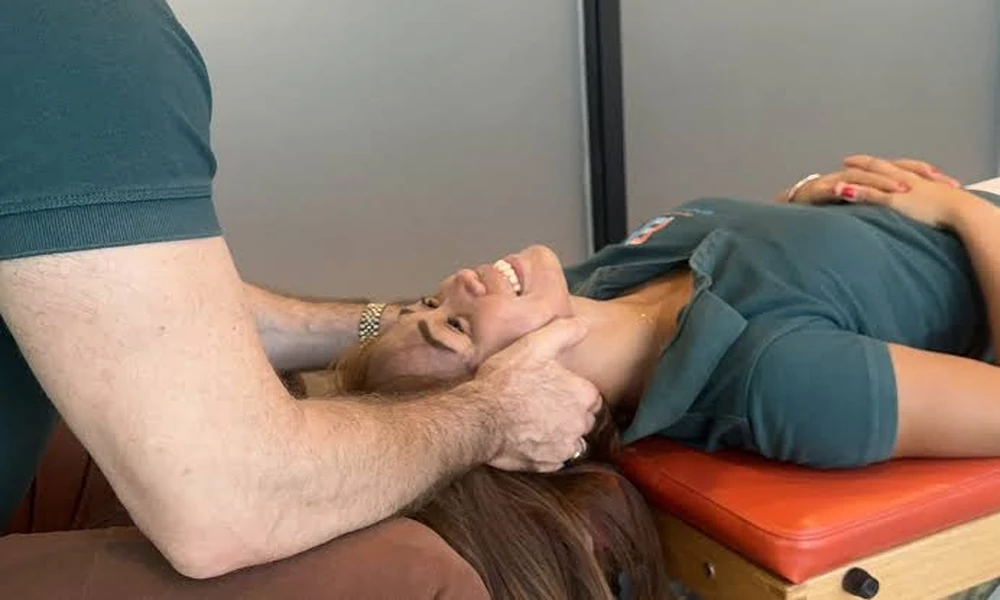
People delay a first appointment mostly because they do not know what happens in one. The picture in most minds is lying face down while something is cracked, which is understandably off-putting for anyone whose back already hurts. In reality a first visit is mostly conversation and examination. Knowing what booking a first consultation with the Chirotherapy team actually involves removes most of the reason for putting it off.
Before You Arrive
Wear or bring clothing you can move in. Assessment involves bending, turning and lifting limbs, and a fitted work outfit makes all of it awkward. Note your medications, particularly anticoagulants, and any significant medical history including previous surgery, fractures or diagnosed conditions. If you have had imaging or a specialist opinion on the same complaint, bring the report rather than a summary from memory. Allow more time than a follow-up would need.
The History
The appointment starts with questions, and the answers matter more than most patients expect. When did it start, and was there a specific incident or did it build gradually. What makes it worse and what eases it. Where exactly is it, and does anything travel into an arm or leg. Is there numbness, pins and needles or weakness. How does it behave across a day and across a night. Previous episodes and what helped. Work, activity, sleep and general health. This is where the diagnosis largely comes from.
Screening for Anything Serious
Part of the history covers features that would point away from a mechanical problem: unexplained weight loss, fever, night pain unrelieved by rest, a history of cancer, significant recent trauma, progressive weakness or numbness, and changes in bowel or bladder control or numbness around the saddle area. These are uncommon, and they are the reason the questions are asked. A practitioner who identifies one of them should refer you for medical assessment rather than proceeding, and that is the correct outcome.
The Physical Examination
Expect assessment of how you move: bending, extending, rotating, and which directions reproduce or ease symptoms. Palpation of joints and soft tissue to find what is tender and what is restricted. Strength testing of relevant muscle groups. Where symptoms travel into a limb, neurological screening of reflexes, sensation and power. Sometimes orthopaedic tests for specific structures. The point is to narrow down which tissues are involved rather than to confirm a decision already made.
Whether You Need a Scan
Usually not. Guidance across most health systems discourages routine imaging for straightforward mechanical back pain without red flags, because incidental findings are extremely common and frequently unrelated to symptoms. Disc changes appear in large proportions of people with no pain at all, and seeing them reported can make patients more fearful and less active, which worsens outcomes. Imaging is appropriate after significant trauma, with progressive neurological signs, or where the history suggests something other than a mechanical problem.
The Explanation
You should leave understanding what the working diagnosis is, in ordinary language, and what it means for the next few weeks. For most mechanical back and neck pain the outlook is good, and hearing that accurately is itself useful, since fear of movement predicts poor outcomes more reliably than most physical findings. Ask questions if the explanation involves anything you do not follow. A clinician offering chiropractic consultations should welcome that rather than rushing past it.
Consent Before Treatment
Before any hands-on work you should be told what is proposed, what it involves, what it typically feels like, what the common after-effects are, and what alternatives exist. Mild soreness for a day is common after manual therapy. If an adjustment to the neck is being considered, the practitioner should discuss it specifically, including that serious adverse events are rare but that gentler alternatives such as mobilisation exist. You are entitled to decline any technique and ask for another approach.
The Plan
A reasonable plan states how many sessions before reassessment, what should have changed by then, and what happens if it has not. Something measurable is better than a general sense of improvement: turning your head to reverse the car, sitting through a long meeting, sleeping through the night. Expect exercises to be part of it from early on. Be cautious of long pre-paid packages agreed at a first visit, since a plan that cannot be revised is not really a plan.
How You Might Feel Afterwards
Reactions vary and knowing the range in advance prevents unnecessary alarm. Some people feel noticeably better immediately. Others feel mild soreness or a dull ache in the treated area for a day, similar to the feeling after unfamiliar exercise, and this is more common after a first session than later ones. Needling can leave a localised ache and occasionally small bruising. Gentle movement and normal activity generally settle it faster than resting completely. What is not expected is severe or escalating pain, new numbness or weakness, so contact the clinic if any of those occur rather than waiting for the next appointment.
Practical Matters
Ask what a first consultation costs and how follow-ups are priced, since they usually differ. Check whether corporate outpatient benefits or insurance cover applies and whether claims are handled directly or by reimbursement. Ask about cancellation policy and how to reach the clinic if something worsens between appointments. Sorted in advance, booking a first consultation with the Chirotherapy team is a single hour that produces a diagnosis, an explanation and a plan, which is considerably more than most people expect from it.
